Fall Planting Strategies That Actually Work
Fall is the most important planting window for food plotters. The species you plant in August and September will determine whether deer are on your property during hunting season. But timing, species selection, and soil management all have to come together. Here's how to make your fall plots count.
01Why Fall Planting Matters More Than Spring
Spring food plots are nice to have. Fall food plots are essential. The reason is simple: fall plots mature during hunting season. A well-timed brassica plot reaches peak attraction in late October through December — exactly when you're in the stand.
Fall-planted plots also benefit from natural moisture patterns. Late summer rains germinate seed quickly, and cooler fall temperatures reduce drought stress. Most cool-season species actually prefer the shortening days and cooling temperatures of autumn.
Additionally, fall planting gives you a chance to correct spring mistakes. If your spring clover plot didn't establish well, you can overseed it in early fall. If you have bare ground from a failed summer planting, fall brassicas will fill it in fast.
02The Timing Window: Don't Miss It
In the northern US (zones 4-5), your fall planting window is August 15 through September 15. In the mid-south (zones 6-7), you have until early October. Southern food plotters (zones 8-9) can plant as late as mid-October.
Within that window, earlier is almost always better. Brassicas need 60-90 days of growth before the first hard freeze to reach full size. Plant too late and your turnips will be golf-ball sized instead of softball sized when deer need them most.
The exception is cereal grains (oats, wheat, rye). These can go in later because they germinate and grow faster than brassicas. If you miss the early window for brassicas, pivot to a cereal grain mix — it's better than an empty plot.
03The Best Fall Species Combinations
The classic fall mix is brassicas + cereal grains. A blend of purple top turnips (5 lbs/acre), daikon radish (5 lbs/acre), rapeseed (4 lbs/acre), and forage oats (50 lbs/acre) gives you early attraction (oats), mid-season draw (radish and rapeseed tops), and late-season holding power (turnip bulbs).
For a simpler approach, straight winter wheat at 100 lbs/acre is nearly foolproof. Deer hammer winter wheat from germination through late winter. It's not as flashy as a brassica plot, but it's reliable and forgiving of timing mistakes.
If you have existing clover plots, overseed them in early fall with crimson clover (15 lbs/acre) to thicken the stand and add fall/winter production. Frost-seed in late winter by broadcasting seed on frozen ground — the freeze-thaw cycles work the seed into the soil naturally.
04Soil Prep for Fall Success
If you applied lime in spring, your fall plots will benefit from improved pH. If you didn't, apply lime now — it won't fully activate before this fall's planting, but it sets you up for next year.
For no-till planting (which we strongly recommend), spray existing vegetation with glyphosate 7-14 days before planting. This gives the herbicide time to kill the competition without leaving residue that affects your new seedlings.
Apply 200-300 lbs/acre of 13-13-13 fertilizer at planting time. For brassicas specifically, an extra 50 lbs/acre of urea (46-0-0) applied 3-4 weeks after germination will boost leaf and bulb production significantly.
05Equipment Tips for Fall Planting
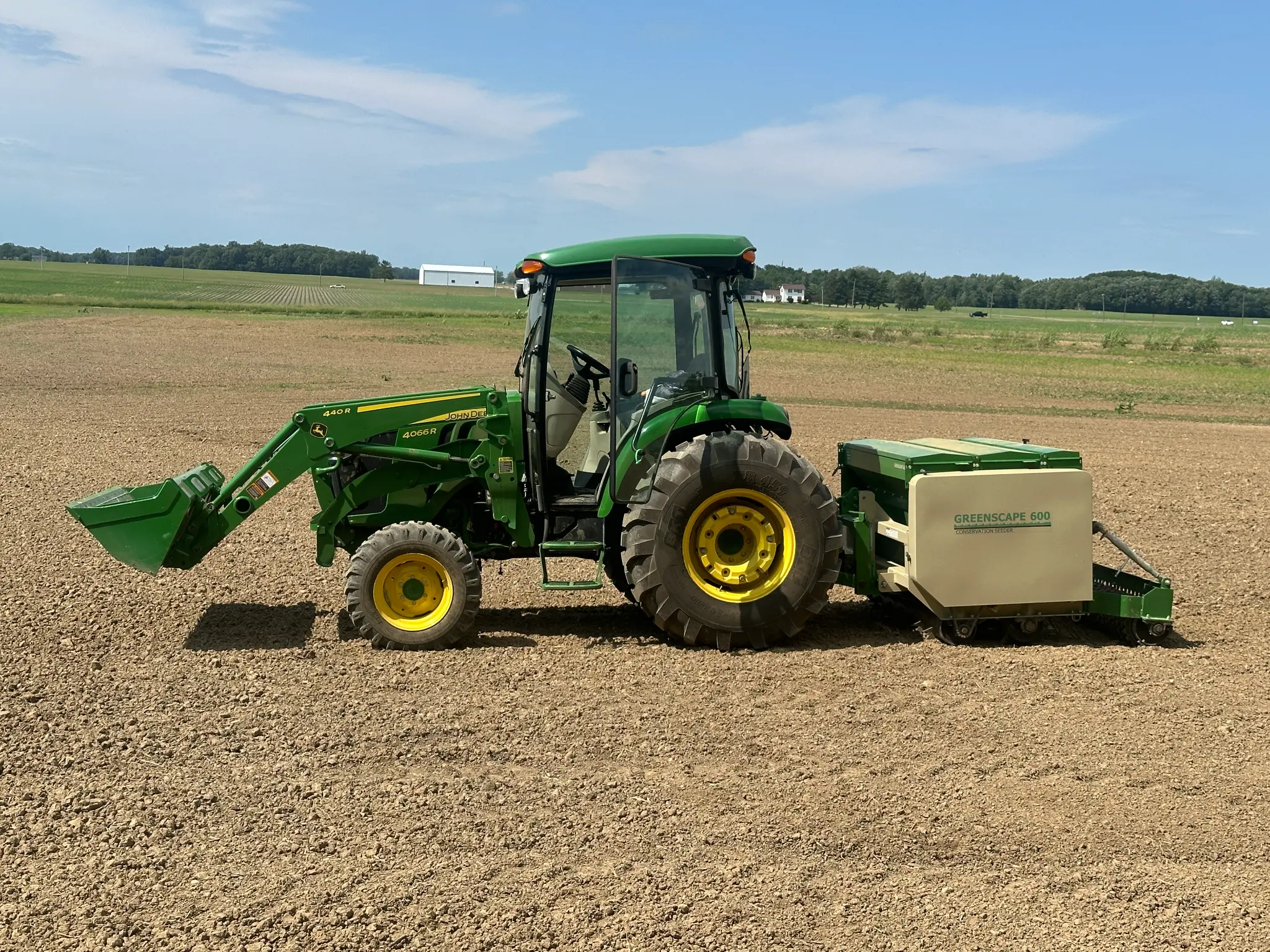
Fall planting conditions are often drier than spring, which means harder ground. Make sure your drill's coulters are sharp — dull coulters skip across hard soil instead of cutting through it. On a Greenscape drill, check the coulter depth adjustment and increase pressure if needed.
Seeding depth is critical for small-seeded brassicas. Turnips, radishes, and rapeseed should be planted at 1/4 inch — no deeper. The Greenscape's depth control bands make this easy to set precisely. If you're broadcasting, you need a cultipacker or roller to press seed into the soil.
Plant when soil moisture is adequate. If conditions are bone dry, wait for rain. Planting into dry soil is a recipe for poor germination. Check the weather forecast and time your planting to coincide with expected rainfall.
06After Planting: What to Expect
Cereal grains will emerge in 5-7 days. Brassicas take 7-14 days depending on moisture and temperature. Don't panic if you don't see green in the first week — give it time.
Deer will start hitting your plots as soon as green growth appears. Early-season browsing on young brassicas is actually beneficial — it stimulates branching and produces more forage overall. Don't worry about deer eating your plot down in September; it will recover.
By late October, your brassica plot should be lush and green while surrounding vegetation is going dormant. This contrast is what makes fall food plots so effective — your plot becomes the only green buffet in the neighborhood. After the first hard frost, sugar content in brassica leaves and bulbs spikes, and deer usage intensifies dramatically.
Ready to Get Started?
Put this knowledge to work with our free interactive tools.
Plan Your Fall Planting