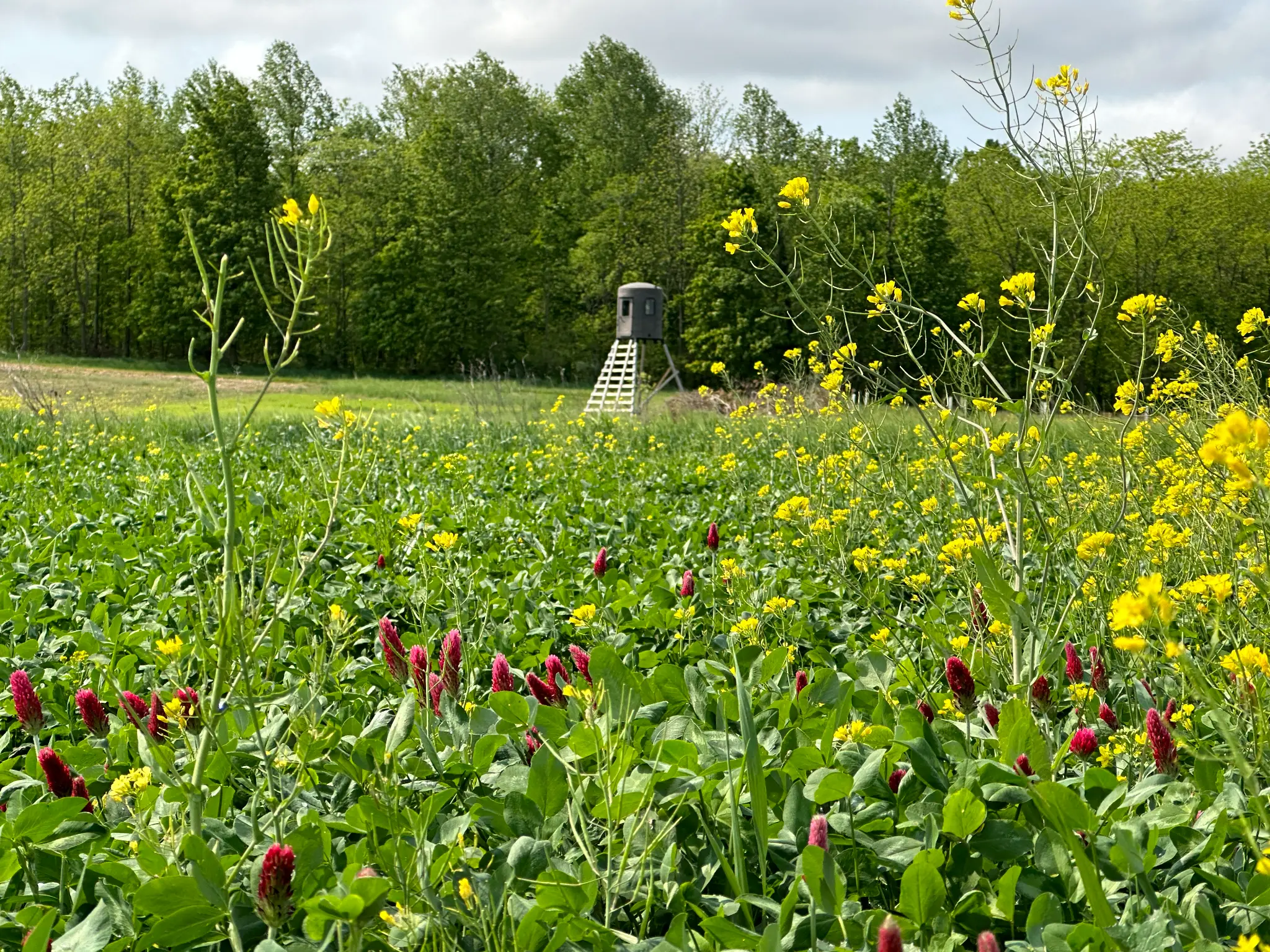
The Beginner's Complete Guide to Food Plots
Planting your first food plot can feel overwhelming. There are dozens of seed species, multiple equipment options, and conflicting advice from every hunting forum on the internet. This guide cuts through the noise and gives you a clear, step-by-step path from bare ground to a thriving food plot that attracts and holds deer on your property.
01Step 1: Choose Your Location
The single biggest factor in food plot success is location. You want a spot that gets at least 4-6 hours of direct sunlight, has decent soil drainage, and is positioned where deer naturally travel. Look for existing trails, bedding areas, and transition zones between timber and open ground.
Avoid low spots that hold standing water after rain — most food plot species can't tolerate wet feet. South-facing slopes warm up earlier in spring and stay productive longer into fall. If you're working with heavy timber, you may need to clear trees to get enough sunlight.
Size matters, but not the way most beginners think. A well-placed quarter-acre plot in a travel corridor will outperform a 2-acre plot in the middle of an open field. Start small — you can always expand later once you see how deer use the area.
02Step 2: Test Your Soil
Soil testing is the most underrated step in food plotting. A $15 soil test from your county extension office will tell you exactly what your soil needs. Most food plot failures trace back to low pH — if your soil is below 6.0, your seeds are fighting an uphill battle no matter how good your equipment is.
Lime is cheap. Seed is not. If your soil test says you need 2 tons of lime per acre, apply it. It takes 3-6 months for lime to fully adjust pH, so plan ahead. Fall lime applications set you up for spring planting success.
Beyond pH, pay attention to phosphorus and potassium levels. A balanced 13-13-13 fertilizer at 200-300 lbs per acre is a solid starting point for most food plot soils. Apply fertilizer at planting time for best results.
03Step 3: Pick Your Seeds
For beginners, keep it simple. A clover blend (white clover + crimson clover) planted in spring is nearly foolproof and provides year-round forage. For fall plots, a brassica mix (turnips, radishes, rapeseed) combined with cereal grains (oats, winter wheat) gives you fast growth and late-season attraction.
Avoid the temptation to plant 10 different species in your first plot. Master 2-3 species first, then experiment. Clover is the foundation of most successful food plot programs because it's perennial, nitrogen-fixing, and deer eat it from April through December.
Buy seed from a reputable source and check the germination date on the bag. Old seed = poor germination = wasted money. Our seed calculator can help you figure out exactly how much seed you need for your plot size.
04Step 4: Choose Your Equipment
This is where most beginners make their biggest mistake: broadcasting seed on unprepared ground. Broadcast seeding wastes 30-50% of your seed because it sits on top of the soil where it dries out, gets eaten by birds, or washes away in the first rain.
A no-till drill places seed at the correct depth with consistent spacing and presses it into firm contact with the soil. The result is 2-3x better germination rates compared to broadcasting. That means you use less seed, get thicker stands, and spend less money per acre.
If you're on a tight budget, the PH Outdoors G3 is an excellent entry-level drill at $11,577. But if you can stretch to the Greenscape 600-2 at $8,383, the 4-stage hybrid drop-metered system is a significant upgrade — it handles everything from tiny clover seeds to large soybeans without changing settings.
05Step 5: Plant at the Right Time
Timing is everything. Cool-season species (clover, brassicas, cereal grains) should be planted in early fall — typically late August through mid-September in the northern US, or September through October in the south. Spring plantings work too, but fall gives you a head start.
Warm-season species (soybeans, cowpeas, sunflowers) go in after your last frost date, usually May through June. Soil temperature matters more than calendar date — wait until soil temps hit 55°F at 2 inches deep before planting warm-season crops.
Our Planting Calendar tool gives you region-specific timing for every species based on your location. Use it to plan your planting windows and avoid the most common timing mistakes.
06Step 6: Maintain and Monitor
After planting, your main job is patience. Most food plot species take 7-14 days to germinate and another 2-3 weeks to establish. Resist the urge to replant if you don't see results in the first week.
For perennial plots (clover), plan to mow 2-3 times during the growing season to keep weeds in check and stimulate new growth. Mow to about 6-8 inches — never scalp a clover plot. Annual plots (brassicas, grains) generally don't need mowing.
Set up trail cameras on your plots to monitor deer usage. This data is invaluable for planning next year's plots. You'll quickly learn which locations, species, and timing work best on your specific property.
Ready to Get Started?
Put this knowledge to work with our free interactive tools.
Calculate Your Seeding Rates